
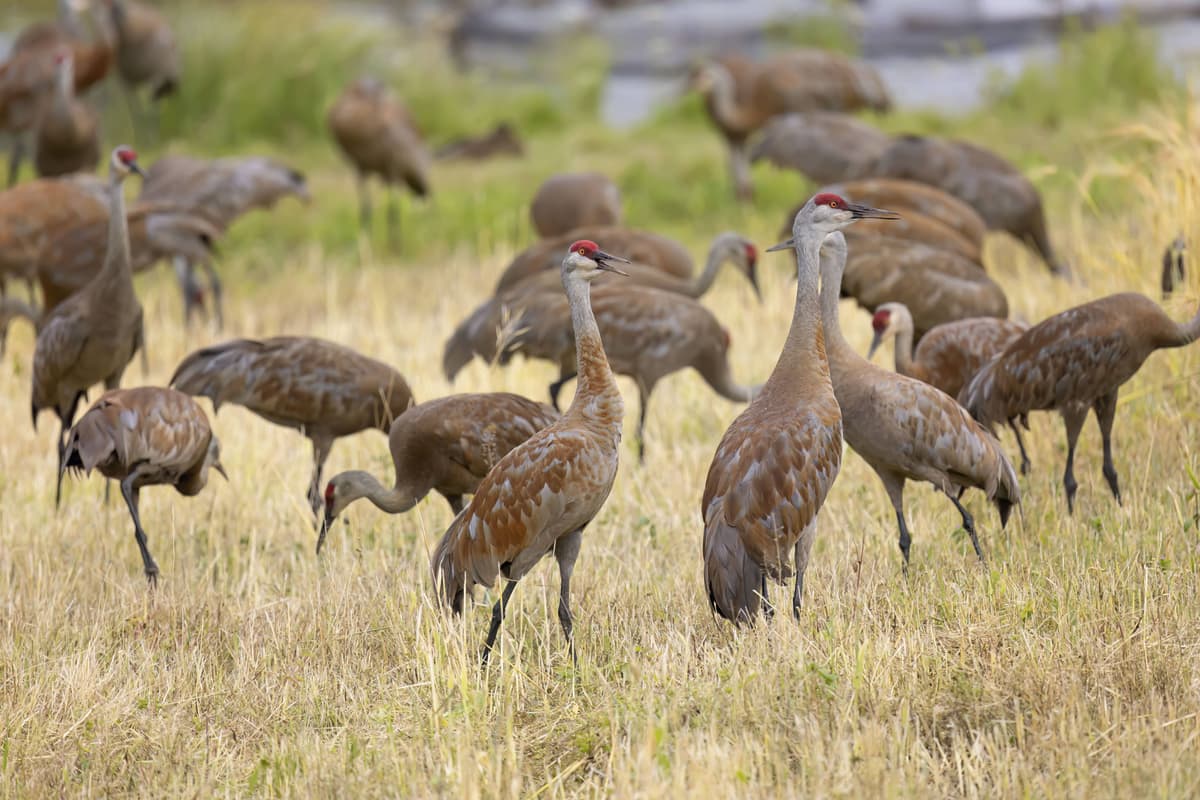
Every spring and fall I eagerly anticipate the wonderful rattles and bugles of sandhill cranes flying over my midwestern home on their migration to and from their wintering grounds. This seasonal traveling symphony is ancient! The oldest fossil of a sandhill crane is more than 2 million years old. In this episode we listen to the ancient symphony of migrations or cranes and geese. I also explore the conservation practices that protect migratory routes in North America. Migrations take place over thousands of miles, and many types of landscapes. Migratory birds need places to stopover and feed and rest. These places are so important to the success of migratory species, and as we see changes to land-use throughout migration pathways there have had to be conservation interventions implemented. Even so, the disappearance of wetlands, and the changing patterns of agriculture impact the successful migrations of cranes and other birds.